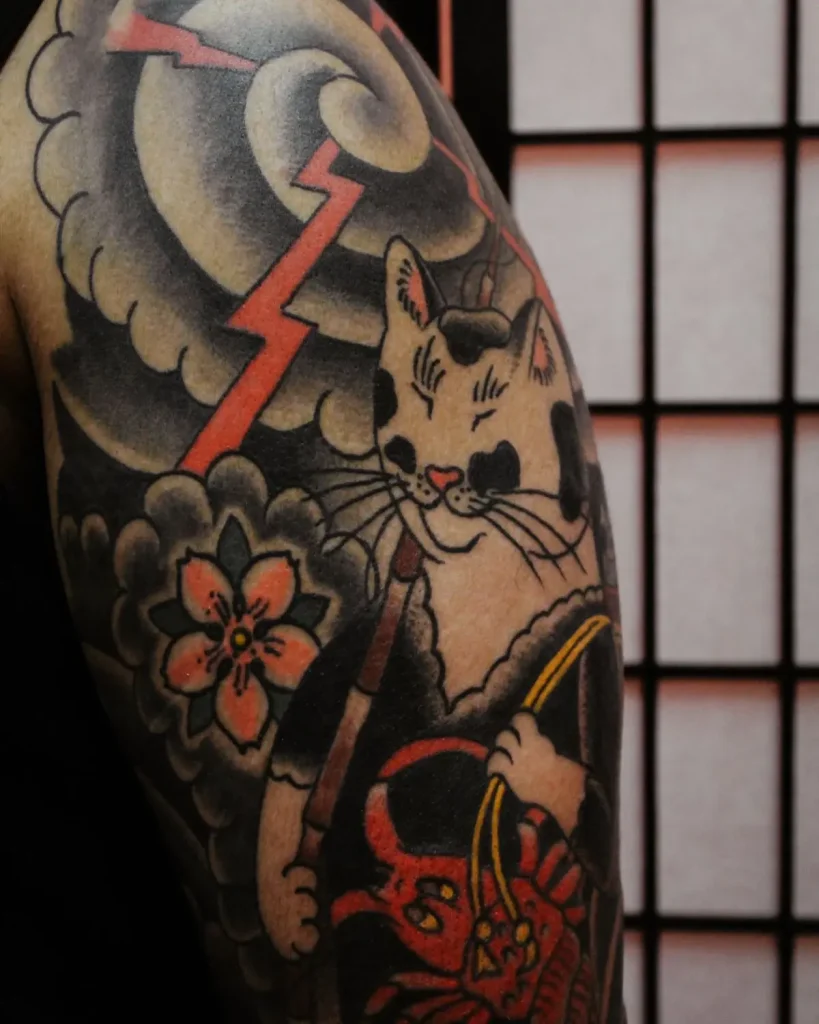
If you are searching for a Japanese tattoo in San Diego, you already have good taste. Few styles in all of tattooing come close to what Irezumi — traditional Japanese tattooing — can do on the human body. However, the sheer scope of the style can feel overwhelming when you are starting out. Where do you begin? What imagery is right for you? How does a sleeve actually come together? At Good Company Tattoo on University Ave in City Heights, our artists have answered these questions hundreds of times. Therefore, we put together this guide to walk you through everything — the imagery, the meaning, the formats, and what to expect when you sit down to build something truly extraordinary.
What Makes Japanese Tattooing So Special? The History Behind Irezumi
First, it helps to understand what sets this style apart. Japanese tattooing is built on a visual language developed over centuries. Bold, confident outlines define every composition. A specific color palette — deep reds, rich greens, royal blues, and jet black — gives the work its signature intensity. Additionally, the subject matter draws from mythology, Buddhism, nature, and folklore that carries real symbolic weight.
Furthermore, Japanese tattooing treats the body as part of the composition. It uses the body’s natural curves, muscles, and contours to make imagery feel alive rather than flat. That is what separates a great Japanese tattoo from simply a tattoo with Japanese imagery on it.
The Supporting Elements That Make It All Work
Peonies, chrysanthemums, cherry blossoms, waves, and clouds are the connective tissue of Japanese tattooing. These elements fill the space between major subjects in ways that transform a collection of images into a unified, breathing composition. Because of how they flow around the body, they are what take a Japanese tattoo from impressive to genuinely breathtaking.
The best Japanese tattoos don’t just sit on the skin. They move with the body — using its natural curves to make the imagery feel genuinely alive.
Japanese Tattoo Symbolism: Dragons, Koi, Tigers, and More
The imagery is where it gets really exciting. Japanese tattooing has one of the richest libraries of subject matter of any tradition in the world. Moreover, every major element carries meaning that has been refined over generations.
Dragons
Dragons in the Japanese tradition are not the fire-breathing monsters of Western mythology. Instead, they are creatures of water and sky — powerful, wise, and protective. A Japanese dragon winding up a sleeve feels like it is moving even when you are standing still. Because of how an artist uses the arm’s natural contours, the creature appears to twist through clouds or crash through waves with genuine momentum.
Koi Fish
Koi represent perseverance, transformation, and the courage to push upstream against resistance. They are also one of the most versatile subjects in the tradition. For example, a single statement koi on a calf works just as powerfully as a full pond scene across an entire back. The natural flow of their bodies makes them exceptionally well-suited to the human form.
Oni Masks, Tigers, and More
Oni masks are bold, graphic, and immediately striking — perfect centerpieces for chest pieces and shoulder work. Tigers represent strength, bravery, and protection. A Japanese tiger done with skill and commitment brings an energy that is hard to compare to anything else in tattooing. Both subjects, however, require an artist who understands how to balance their intensity with surrounding floral and water elements.
Japanese Sleeve Tattoos in San Diego: Arm Sleeves from Half to Full
A Japanese sleeve tattoo in San Diego is one of the most rewarding long-term tattoo projects you can commit to. The arm is an ideal canvas because its natural curves give Japanese imagery something real to work with. A dragon wrapping from shoulder to wrist, for instance, does not simply sit on the arm — it inhabits it.
Starting With a Half Sleeve
For many clients, a half sleeve is the natural starting point. The upper arm alone offers incredible real estate. A coiling dragon from shoulder to elbow works beautifully, as does a striking oni mask with chrysanthemums fanning outward. Additionally, a Japanese tiger across the bicep with waves breaking below is among the most requested compositions at our City Heights shop. Half sleeves show in a t-shirt but can still be covered when needed.
Building a Full Sleeve
Full sleeves that run from shoulder to wrist are where Japanese tattooing becomes truly epic. They are built across multiple sessions over months or even a year or more. Therefore, patience is part of the process. However, the result is worth every session — a completed Japanese sleeve tells a story where every inch connects to every other inch. It breathes.
A Japanese sleeve consultation at Good Company Tattoo always starts with a genuine conversation about themes and meaning. Do you want a unified flowing scene? A central dragon or tiger with supporting botanicals? Because these decisions shape everything that follows, we take the time to get them right before a single line is drawn.
Japanese Leg Sleeve Tattoos: The Most Underrated Canvas in San Diego
The leg is one of the most underutilized canvases for Japanese tattooing — and, frankly, one our artists get genuinely excited about. Furthermore, it offers some unique advantages that the arm simply cannot match.
The Thigh
The thigh is one of the best placements on the entire body for large-scale Japanese work. It is generous, relatively flat, holds ink beautifully, and heals well. For example, a full Japanese scene across the thigh — a koi moving through water lilies, a dragon emerging from clouds — can be a complete and breathtaking work of art on its own. Because the surface is so generous, the artist has room to execute complex compositions without feeling cramped.
The Calf
From the thigh down through the calf, a Japanese leg sleeve develops the same narrative quality that makes arm sleeves so compelling. The calf’s natural muscle shape creates a curve that makes waves, scales, and flowing fabric look almost three-dimensional. Consequently, many clients start with a calf piece and let the composition grow organically session by session — watching it extend and connect over time is one of the most satisfying long-term experiences in tattooing.
Japanese Chest and Back Tattoos: Bold Statement Pieces at Full Scale
If you are ready to go truly big, a Japanese chest panel or full back piece is the ultimate expression of this tradition. These formats defined Irezumi historically. Additionally, they remain the most powerful way to experience what Japanese tattooing is actually capable of.
Chest Panels
A Japanese chest panel typically spans from the collarbone down across the pectoral and can extend over the shoulder to connect with sleeve work. Oni masks, dragons, and tigers are classic chest centerpieces because they have the visual weight to command that much space. Surrounding them with peonies, clouds, and waves, however, is what creates the balance and flow that makes Japanese chest work so extraordinary.
Full Back Pieces
The back is where Japanese tattooing became legendary — and it is easy to understand why. A full back piece allows for compositions of a scope impossible anywhere else on the body. For example: a dragon spanning the entire back with scales rendered in extraordinary detail, clouds swirling above and waves crashing below. A koi ascending a waterfall with cherry blossoms drifting around it. A Japanese back piece is not just a tattoo. It is a life’s work.
At Good Company Tattoo on University Ave, back piece consultations are some of our most energizing conversations. We take real time to talk through themes, imagery, and how the composition will evolve across many sessions. Because back pieces are built over months, the relationship between artist and client that develops through the process is something genuinely special — and the finished piece reflects every hour of that trust.
If this has your wheels turning — if you are already mentally designing your sleeve or wondering what a Japanese chest panel might look like on your body — come talk to us. Good Company Tattoo on University Ave in City Heights, San Diego is where this conversation happens. Walk-ins are always welcome for smaller work. For sleeves, chest panels, and back pieces, book a consultation. Let us help you build something that will blow people away for the rest of your life.
Frequently Asked Questions
What makes Japanese tattooing different from other styles?
Japanese tattooing, or Irezumi, is defined by bold outlines, a rich color palette, and deeply symbolic imagery drawn from mythology and nature. Additionally, it uses the body’s own curves and contours to create movement and life. It is one of the oldest and most developed tattoo traditions in the world.
What are the most popular Japanese tattoo subjects?
Dragons, koi fish, tigers, and oni masks are the most iconic major elements. They are brought to life by supporting imagery including peonies, chrysanthemums, cherry blossoms, waves, and clouds. For example, dragons represent wisdom and protection, while koi represent perseverance and transformation.
How long does a Japanese sleeve tattoo take in San Diego?
A Japanese half sleeve can take ten to twenty or more hours across multiple sessions. A full sleeve, however, can take thirty to sixty hours or more for a fully detailed composition. Therefore, most clients build their sleeves over several months to a year or longer to allow proper healing between each session.
Where is Good Company Tattoo located?
Good Company Tattoo is located on University Ave in City Heights, San Diego. We serve clients from North Park, Kensington, Mid-City, and across the greater San Diego area. Walk-ins are always welcome. Call us at (619) 672-2317 to book a consultation.
How much does a Japanese sleeve tattoo cost in San Diego?
A Japanese half sleeve at Good Company Tattoo typically ranges from $1,500 to $3,000 or more. A full sleeve can range from $3,000 to $6,000 or more depending on detail and sessions required. Additionally, we offer fully transparent pricing and discuss cost in detail during every consultation.