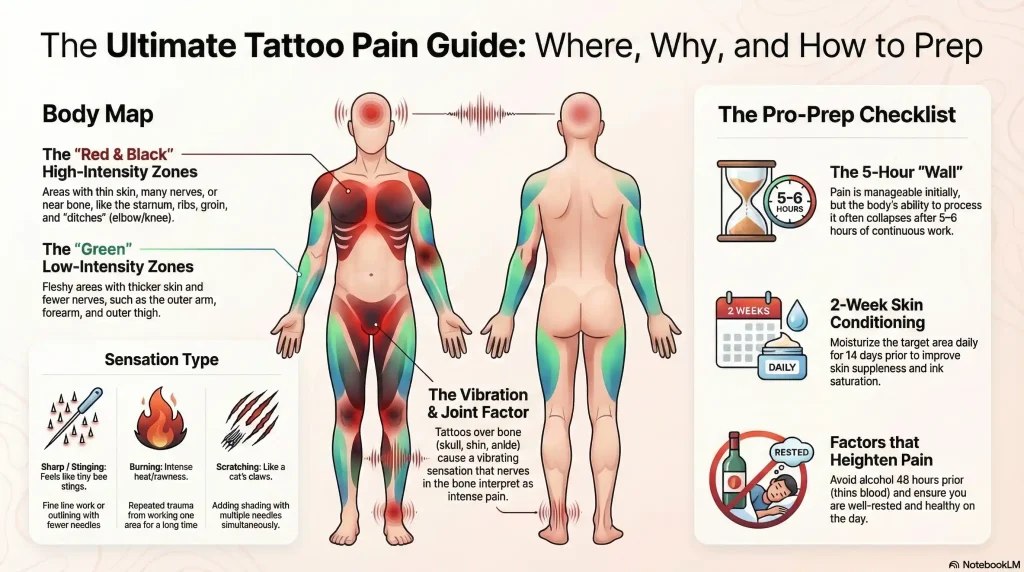
The tattoo pain chart is one of the most searched topics by people considering their first tattoo or planning a new placement. Almost every client asks some version of the same question before sitting down: how much is this going to hurt? It is a fair question. The honest answer is that it depends. It depends on placement, session length, and individual pain tolerance. At Good Company Tattoo on University Ave in City Heights, San Diego, our artists talk about this every day. Therefore, this guide breaks down the tattoo pain chart clearly — which areas tend to be most intense, which are most manageable, and how to prepare for your session.
Everyone experiences tattoo pain differently. This chart reflects what most clients report — but your experience may be entirely different, and that is completely normal.
Why the Tattoo Pain Chart Varies by Placement
Bone, Skin Thickness, and Nerve Endings
The tattoo pain chart varies so much by location for clear anatomical reasons. The primary factors are skin thickness over the area, how close the needle works to bone, and nerve ending density in that part of the body. Areas where skin sits directly over bone — think ribs, spine, shins — tend to be significantly more intense. Additionally, areas with high concentrations of nerve endings can feel sharper and more persistent than fleshier placements.
Muscle and Fat as Natural Cushion
Conversely, areas with more muscle or subcutaneous fat absorb the tattooing sensation much more comfortably. For example, the outer thigh, outer upper arm, and upper back rank among the most tolerable placements. The flesh provides a natural buffer between the needle and the nerves below. Furthermore, experienced collectors often recommend starting with a forgiving placement for a first piece. This lets you understand your own pain response before committing to a more sensitive location.
How Session Length Affects Pain
Session duration also plays a real role — even on a comfortable placement. As time passes, the skin becomes more sensitized and adrenaline begins to wear off. Consequently, most experienced artists recommend shorter initial sessions for new clients, particularly on challenging placements. This gives the body time to adjust and makes the overall experience far more manageable.
High-Pain Placements on the Tattoo Pain Chart
The placements below rank toward the top of the tattoo pain chart for most clients. Individual tolerance varies enormously — some people find these areas completely manageable, while others find them genuinely challenging.
Ribs and Sternum
The ribcage consistently ranks among the most intense placements. Skin sits directly over bone with very little padding. Every breath moves the area during the session. The sternum — running down the center of the chest — presents similar challenges. However, rib and sternum pieces are also some of the most visually stunning placements available. Clients who commit to them consistently say the result is worth it.
Spine and Vertebrae
Tattooing over the spine creates vibration that resonates differently from most other placements. The lower lumbar area tends to be more intense than the upper back. Consequently, back pieces that incorporate the spine require good communication between artist and client throughout the session. Taking breaks and signaling when you need a moment makes a significant difference here.
Hands, Fingers, and Feet
Hands, fingers, and feet occupy their own category on any tattoo pain chart. These areas have extremely dense nerve endings, very thin skin over bone, and face constant movement and friction in daily life. For example, finger tattoos are notoriously intense to sit through. They are also among the more challenging placements to heal and retain over time. Additionally, the tops and soles of feet present similar challenges. These placements suit clients with prior tattoo experience more than first-timers.
Inner Arm and Elbow Ditch
The inner bicep and the soft skin inside the elbow — called the elbow ditch — contain a high concentration of nerve endings and very thin skin. Therefore, these areas feel significantly more intense than the outer arm, even though they sit close in proximity. Clients who find outer arm tattoos comfortable are sometimes surprised by how different the inner arm feels.
Knees, Shins, and Ankles
The shin is another area where skin sits almost directly over bone with minimal cushioning. The knee itself — particularly the kneecap and behind the knee — can be especially intense. Nerve density and bone proximity make both challenging. Additionally, the ankle bone area presents similar difficulty, particularly where the skin thins over the joint.
Neck, Throat, and Head
The neck, throat, and head rank in the upper tier of sensitivity for most people. The skin is thin. Nerve endings are abundant. Bone proximity runs high across much of the skull. Furthermore, these placements vibrate in a way clients often describe as uniquely intense. Consequently, most artists recommend these for experienced collectors who already know what high-sensitivity tattooing feels like.
Low-Pain Placements on the Tattoo Pain Chart
These areas generally rank as the most comfortable placements on the tattoo pain chart. Even the most forgiving spots will have some level of sensation — that is simply the nature of the process.
Outer Upper Arm
The outer upper arm consistently ranks as the most recommended starting point for first-time clients. A generous layer of muscle sits between the skin and any underlying bone. Nerve endings are relatively sparse compared to sensitive areas. The placement is easy to cover or show depending on what you are wearing. Additionally, the outer upper arm makes an excellent foundation for building toward a full sleeve — making it a natural starting point for clients with long-term plans.
Outer Thigh
The outer thigh is one of the largest and most comfortable canvases on the body. Significant muscle and fat tissue cushion the tattooing sensation effectively. Furthermore, its popularity for larger pieces comes directly from how well it tolerates extended sessions. Consequently, the outer thigh is also one of the best placements for Japanese and black and grey realism at large scale.
Upper and Outer Back
The upper back — across the shoulder blades and upper trapezius — is another reliably comfortable placement. Muscle density provides good cushioning. The skin tends to be thicker than in more sensitive zones. Additionally, the outer shoulder area is very manageable even for extended sessions. Therefore, back pieces that begin in the upper or outer zones are a smart choice for building toward larger work over time.
Calves
The calf surprises many clients getting their first leg tattoo. The large gastrocnemius muscle provides excellent cushioning. The area has fewer concentrated nerve endings than the shin or foot. Consequently, calves are a great starting point for leg work — and one reason Japanese and American Traditional calf pieces are so popular at Good Company Tattoo in San Diego.
Outer Forearm
The outer forearm is another solid beginner-friendly placement. Reasonable muscle and tissue density keep the sensation manageable. It is easy for the artist to work on and highly visible — making it a great canvas for work you want to show. However, the inner forearm becomes progressively more sensitive toward the wrist, where skin thins and nerve endings grow denser. Therefore, placement within the forearm matters more than most people initially expect.
How to Feel Your Best in the Chair
Come Prepared Physically
Your physical state on session day has a direct impact on how you feel. Eat a solid meal two to three hours before your appointment. Blood sugar levels affect pain tolerance directly — clients who arrive hungry or dehydrated consistently report more difficulty. Additionally, avoid alcohol for at least twenty-four hours before your session. Alcohol thins the blood and interferes with both the tattooing process and your body’s ability to manage discomfort.
Communicate With Your Artist
Communication is one of the most underrated tools for managing a tattoo session. A good artist checks in throughout the process. Do not push through in silence if you need a break. Short breaks during longer sessions on sensitive areas give your nervous system time to reset. Consequently, clients who communicate openly almost always report a better experience than those who stay quiet and try to endure it.
Technique Makes a Real Difference
An experienced artist uses the machine at the right speed and pressure for each specific area. They know when to ease up and when skin needs a moment to recover. Additionally, at Good Company Tattoo in San Diego our artists pay close attention to how each client responds throughout the session. They adjust their approach as needed — keeping the experience as manageable as possible without compromising the quality of the work. This is part of what sets a skilled artist apart from someone who just runs the machine at one speed regardless of placement or client feedback.
The pain is temporary. The tattoo is permanent. With the right placement, the right artist, and the right preparation, most people are surprised by how manageable the whole experience actually is.
If you have questions about placement, the tattoo pain chart, or what to expect from a specific area — come in and talk to us. At Good Company Tattoo on University Ave in City Heights, San Diego, our artists give honest, realistic guidance about every part of the process. We want you to walk in prepared and walk out with a piece you love. Walk-ins are always welcome. For custom work and larger projects, call us at (619) 672-2317 to book a consultation.
Frequently Asked Questions
What is a tattoo pain chart?
A tattoo pain chart is a guide that ranks different body placements by how much discomfort most people report during tattooing. It helps clients choose placements based on their personal pain tolerance and experience level. However, individual responses vary significantly — the chart reflects general patterns, not guaranteed outcomes.
What is the most painful place to get a tattoo?
The ribs, sternum, spine, hands, fingers, feet, inner arm, and knees rank highest on most tattoo pain charts. These areas share thin skin over bone, high nerve density, or both. Additionally, the neck, throat, and head rank among the most intense placements. Most artists recommend these for experienced collectors rather than first-time clients.
What is the least painful place to get a tattoo?
The outer upper arm, outer thigh, upper back, calves, and outer forearm consistently rank as the most comfortable placements. These areas have more muscle and tissue cushioning and fewer concentrated nerve endings. Furthermore, they are excellent starting points for first-time clients at Good Company Tattoo in San Diego.
How can I reduce tattoo pain during a session?
First, eat a solid meal two to three hours before your appointment and stay well-hydrated. Avoid alcohol for at least twenty-four hours beforehand. Additionally, communicate openly with your artist throughout the session and take breaks when you need them. Furthermore, choosing a beginner-friendly placement for your first piece makes the experience significantly more manageable.
Where is Good Company Tattoo located?
Good Company Tattoo is located on University Ave in City Heights, San Diego. We serve clients from North Park, Kensington, Mid-City, and across the greater San Diego area. Walk-ins are always welcome for smaller work. For custom tattoos and larger projects, call us at (619) 672-2317 or visit goodcotattoo.com to book your consultation.